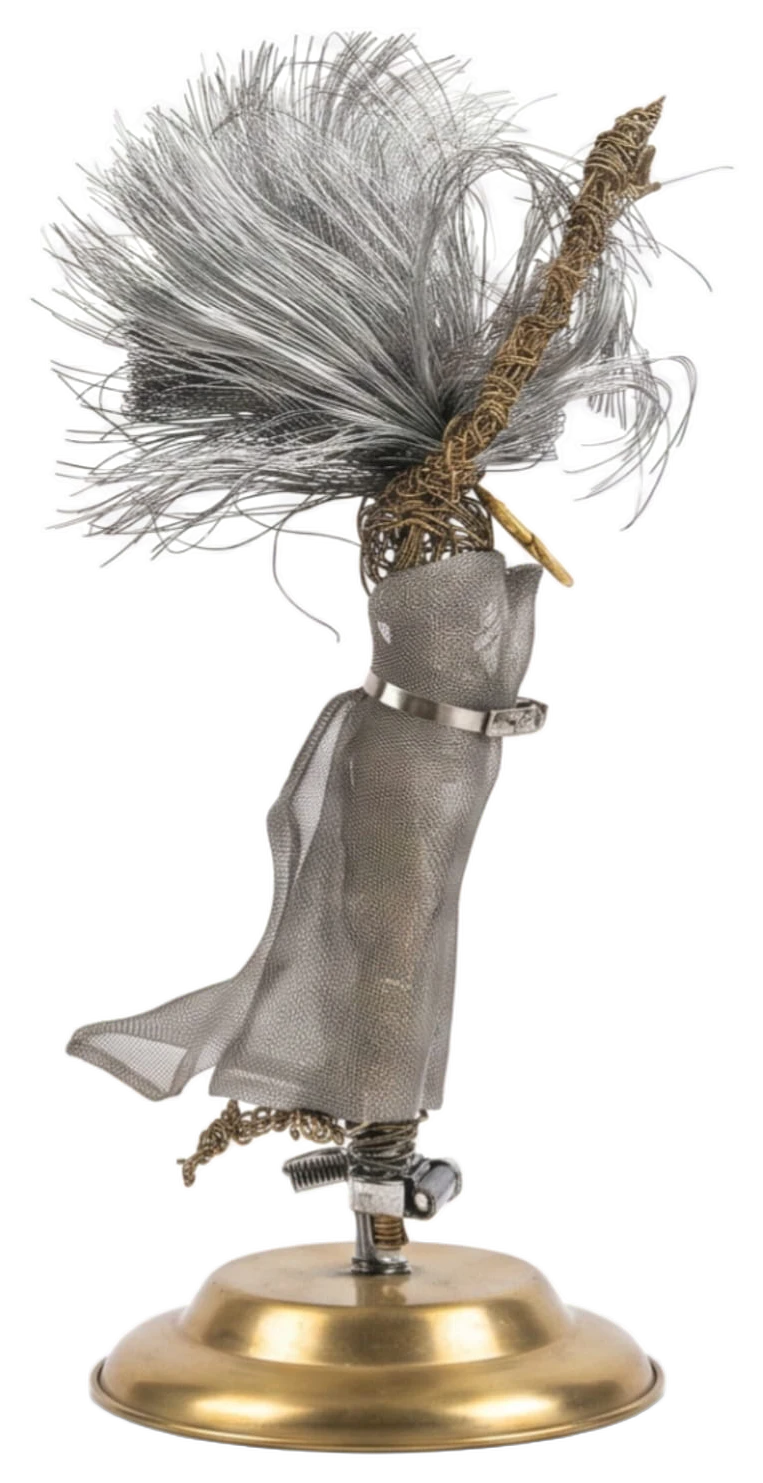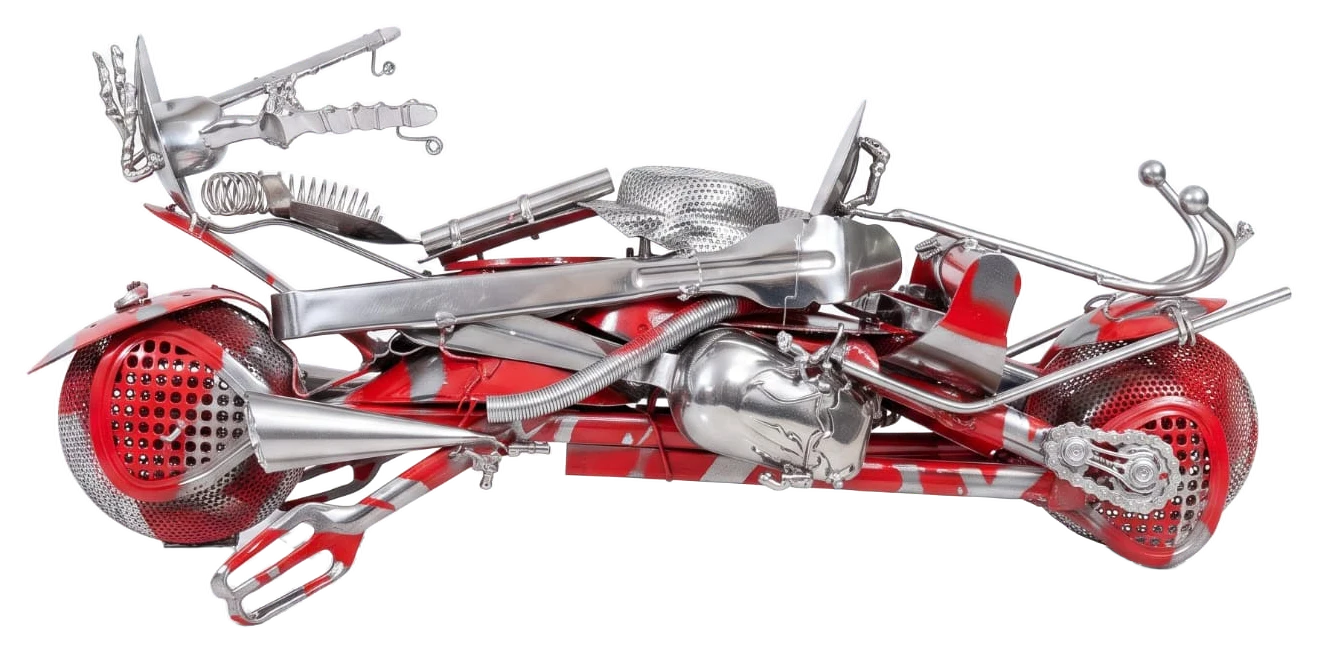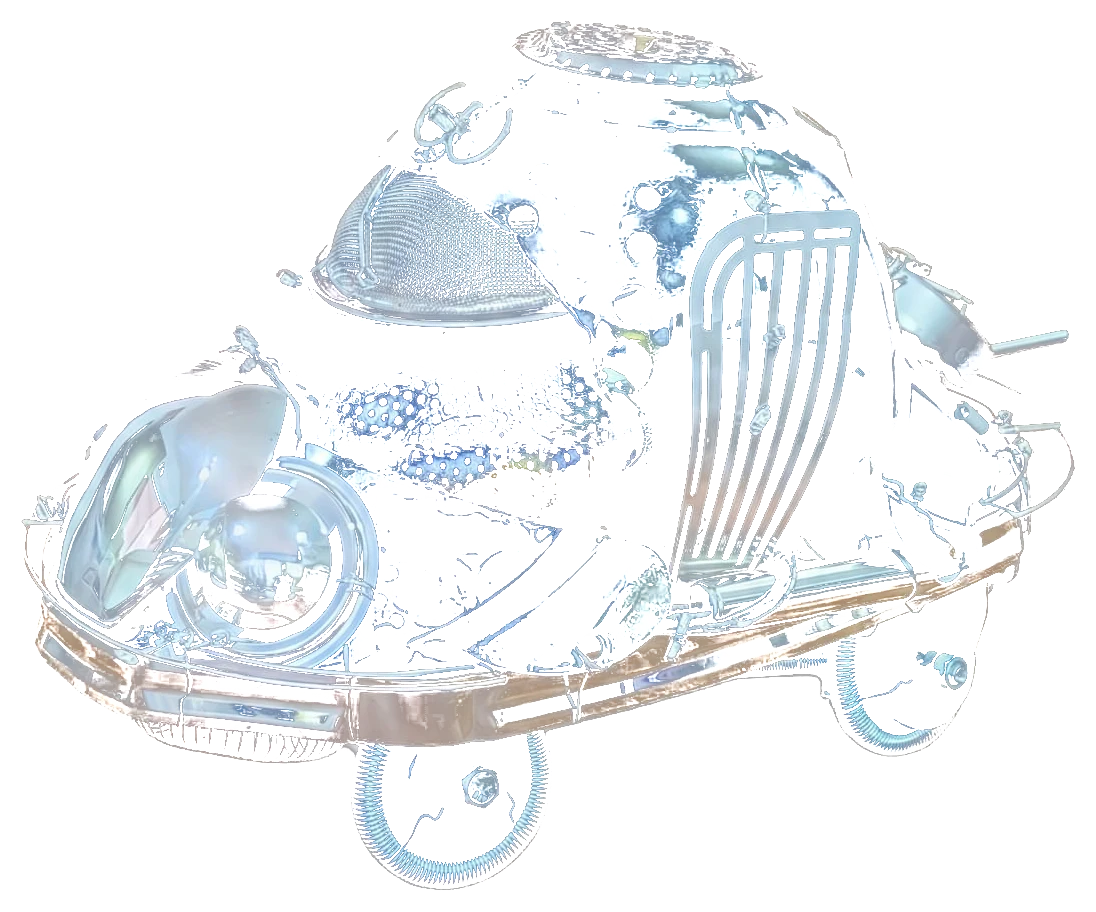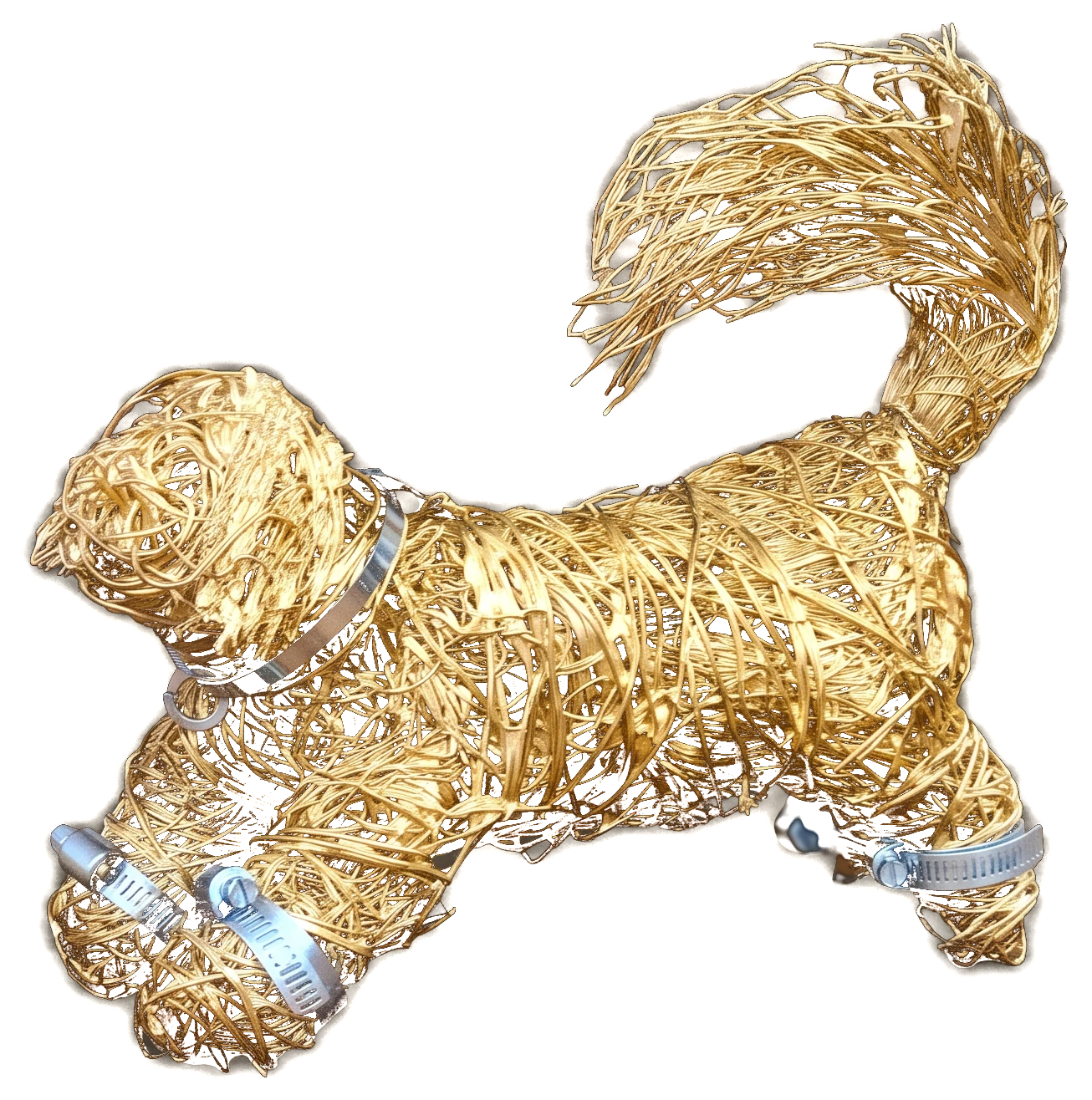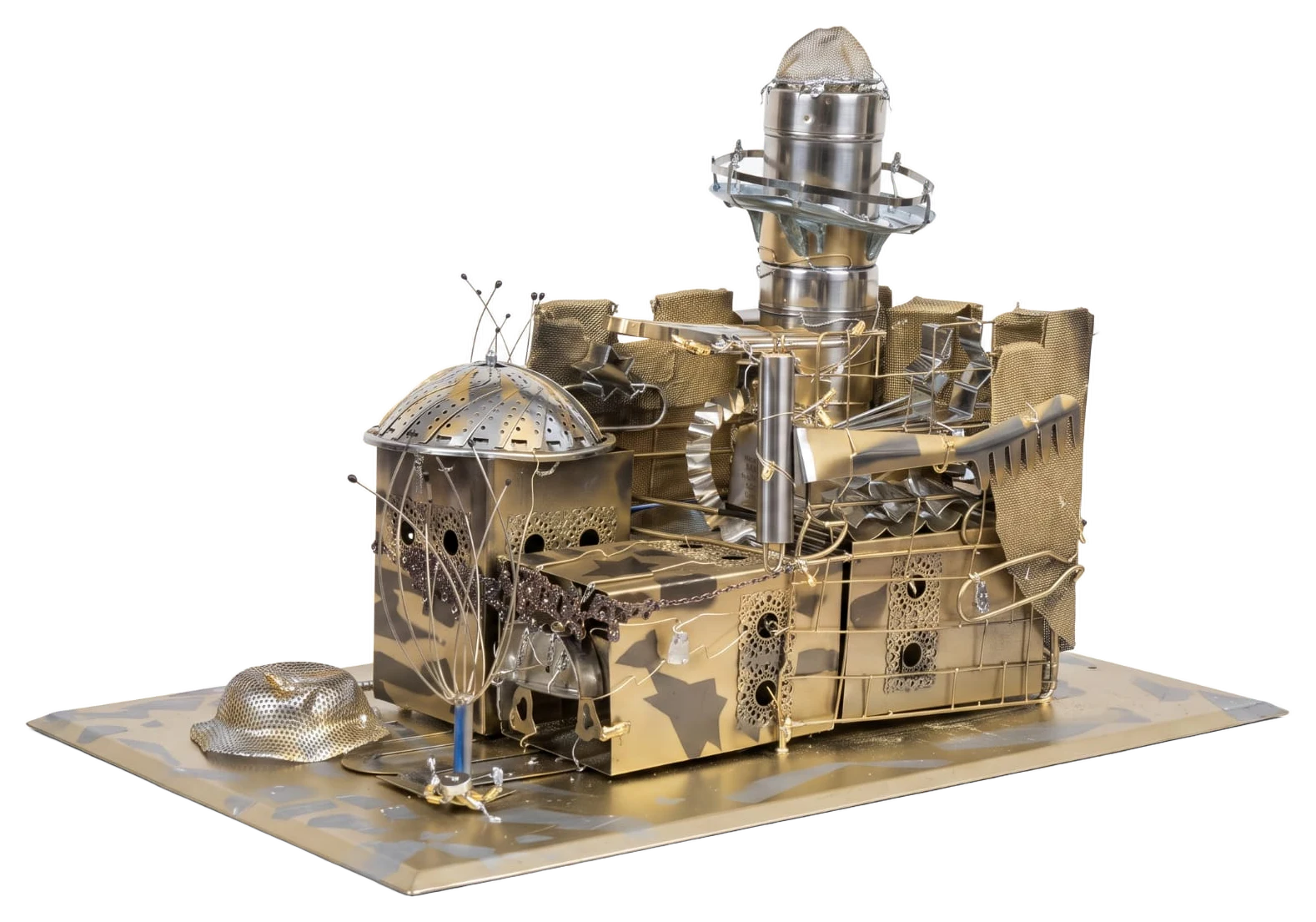
From a piece waiting in the studio — to a sculpture built around your space
Four ways to work with us
Custom commissions (bespoke)
Working with interior designers and architects
Galleries and international shipping
From the first conversation to installation
A conversation, and understanding the space
Sketch and sourcing the materials
Building and mechanical joining
Delivery and installation
A work of art that also sits right in the space
A metal sculpture is a lighting element in its own right: it reflects light, casts shadow, and changes with the time of day. That is why work with professionals begins not with the sculpture but with the space — the lighting, the backdrop and the display height.
We work from plans and dimensions, match the base and height, and on large projects also come to install on site.
Two ways to buy
A finished piece from the studio
A sculpture built especially for you
What to know before you order
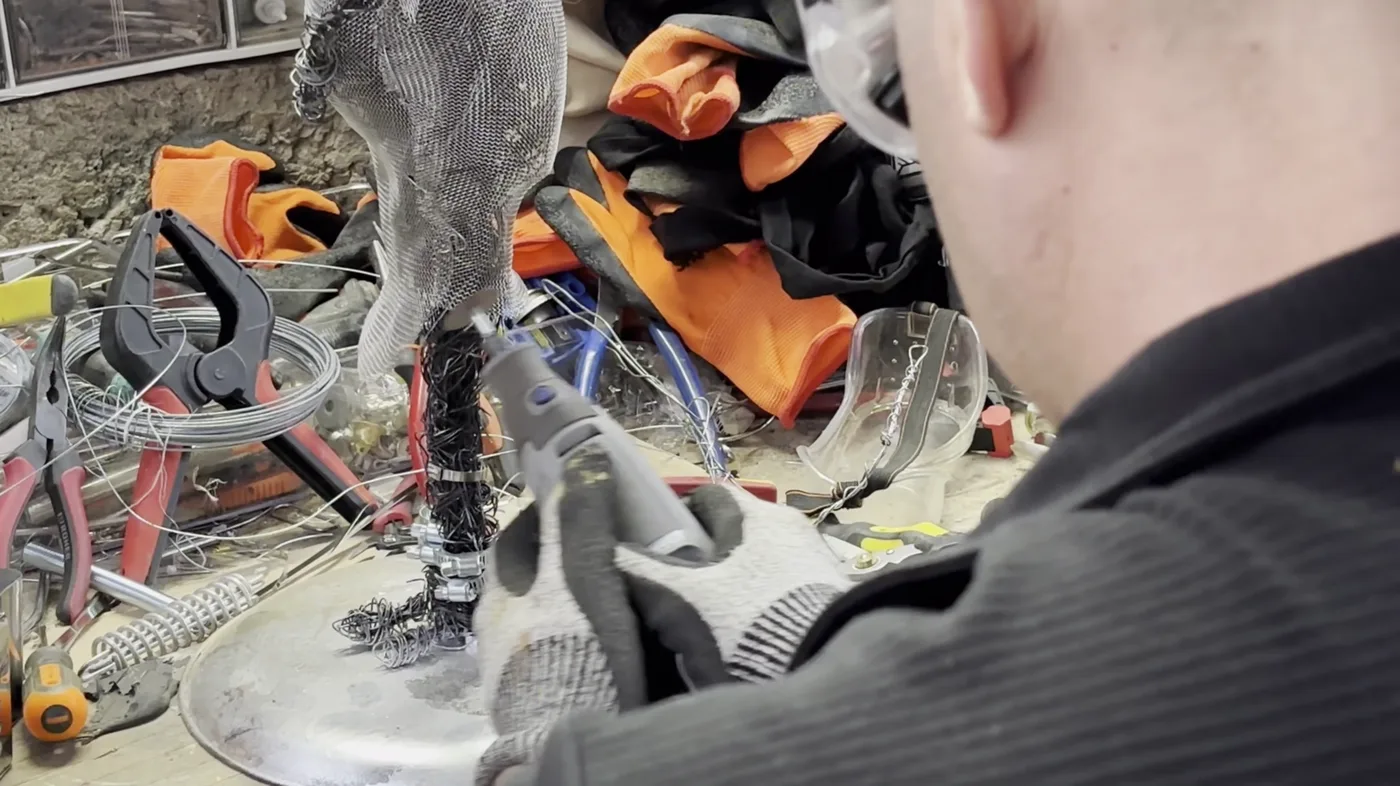
It is the method I developed, and the one that gave the brand its name. Every part of the structure holds another — by bending, pressing, threading, weaving and mechanical locking. I plan the order of assembly so that the parts lock into one another and the sculpture stabilizes itself by its own forces. The result is strong, stable and can be taken apart — with not a drop of heat or chemicals in it.
A fair question, and it has a precise answer. The torch never joins two parts and uses no filler material — it works on a single piece of metal only, in three ways: bending — spot-heating a metal wire so it can be bent without snapping; heat coloring — a controlled burn of galvanized iron wire that takes the metal from light gray to dark gray or black without a drop of paint; and heat cleaning and sanitizing of metals that came from recycling. The joint itself is always mechanical — bending, pressing, threading, weaving and locking.
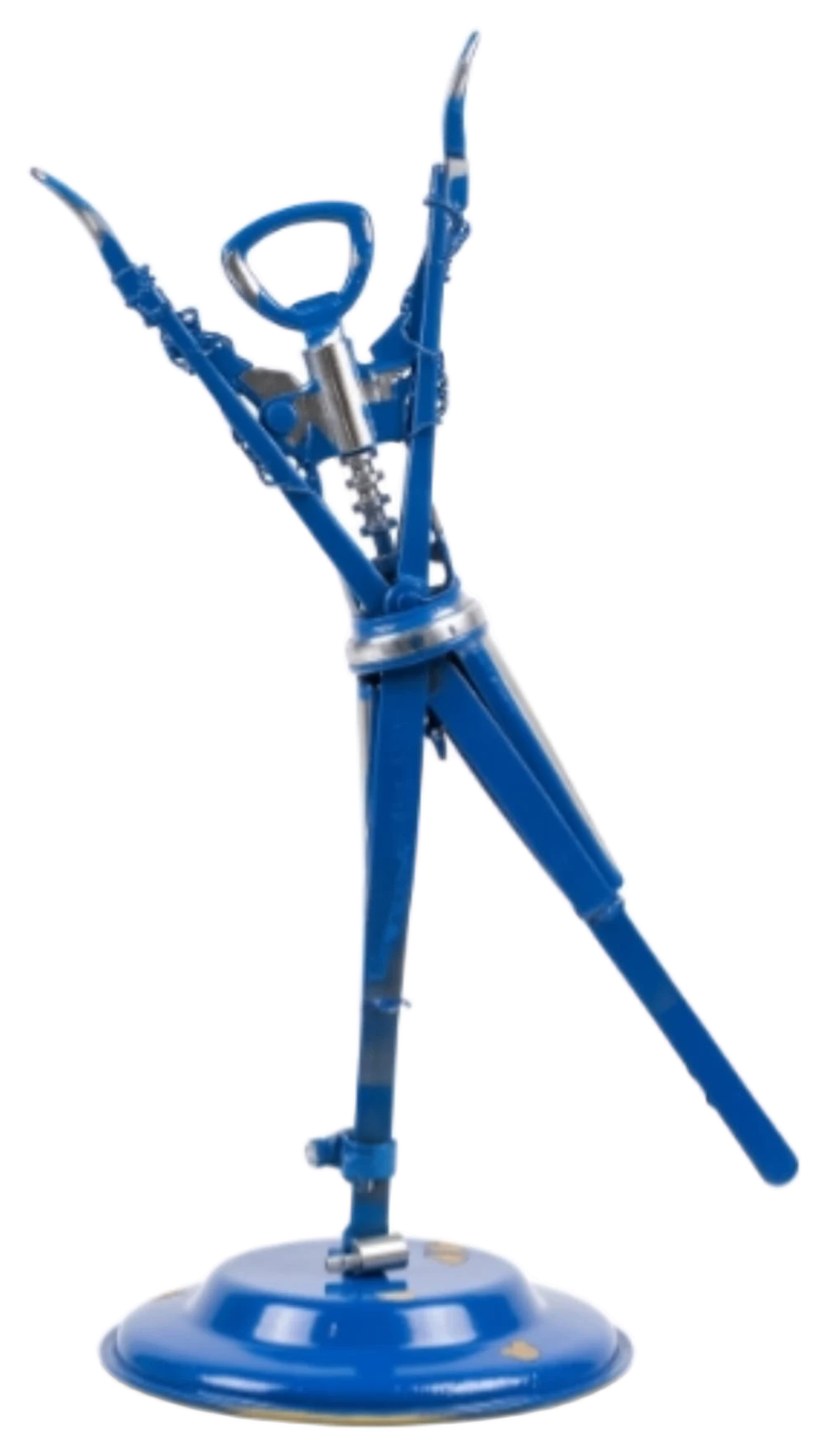
Every kind of metal — steel, copper, aluminum, iron and nickel. The material comes from kitchenware, plumbing fittings, building materials and recycling. A fork, a colander, a faucet or a door hinge takes on an entirely new role inside the piece.
Yes, and it is a large part of the work. You can choose the subject, size and colors, and even have a personal object of sentimental value worked into the sculpture. The process starts with a conversation, continues with a sketch and your approval, and only then does work begin in the studio.
It depends on the size of the piece, its complexity and the availability of the right materials — sometimes we wait a while until exactly the right part is found. You get an accurate time estimate in the first conversation, once we understand what we are building.
The preferred way is to collect from the studio in Gizo — the piece passes from hand to hand with no risk on the road, and you can see the other works too. For those who can’t come, every piece is packed in purpose-made packaging for metal sculptures, with internal bracing that prevents movement. If a piece arrives broken or bent, Michael repairs it and covers the shipping. Shipping rates within Israel and abroad will be posted here soon.
Dry only. Do not clean with water and do not put it in the dishwasher — water damages the parts and the finish. The right way to clean is a dry cloth, or a can of compressed air of the kind used on keyboards and computers, which blows dust out of corners a hand can’t reach. Sculptures with exposed copper develop a natural patina over the years — many collectors actually love it.
A piece can be exchanged within 14 days of receipt; the cost of return shipping is borne by the buyer. In addition, there is a six-month warranty on the stability of the sculpture — if a part works loose by itself, Michael repairs it. The warranty does not apply to deliberate damage, a fall or tampering, and does not cover signs of corrosion and rust — these are part of the natural life of recycled metal. Full details are on the Shipping, Exchanges & Warranty page.
Absolutely. There is a home gallery in Gizo that can be visited by appointment. It is the best way to understand the work — the sculptures change with the angle and the light, and a photograph never captures that fully.